

Sunscreen is the cheapest anti-ageing product you can buy, and the one most often bought wrong. People buy SPF 50, apply a thin layer once in the morning, then wonder why pigmentation keeps spreading. This guide explains what the SPF and PA numbers actually mean, how much to apply, and which is the best sunscreen in Egypt for your skin, with picks from Jmaloo starting at 499 EGP.
SPF and PA: what the numbers really mean
| Marking | Protects against | What it means for your skin |
|---|---|---|
| SPF | UVB rays | The rays that burn. SPF 30 blocks about 97% and SPF 50 about 98% |
| PA+ to PA++++ | UVA rays | These penetrate deeper and cause pigmentation and ageing. PA++++ is the highest grade |
| Water resistant | — | It resists water for a stated time (usually 40 or 80 minutes), not that it is waterproof |
Note something important: the difference between SPF 30 and SPF 50 is roughly one percent of blocking. SPF 50 is not dramatically stronger — the real difference is in application, not the number. An SPF 30 applied properly beats an SPF 50 applied at a quarter of the right amount.
More importantly, most people focus on SPF and ignore PA. UVA rays cause pigmentation, dark patches and ageing, and they pass through windows and cloud. If you are buying sunscreen in Egypt, look for PA++++.
Quantity: the real reason sunscreen fails
The number on the bottle is measured in a lab at 2mg per square centimetre of skin — far more than people actually apply. In practice:
- For the face and neck: two full finger-lengths of product, roughly a quarter teaspoon.
- Apply less than that and your real protection drops to well under half the stated number.
- Reapply every two hours outdoors, and immediately after swimming or sweating.
Reapplying over makeup is the known obstacle, which is exactly why powder sunscreens exist — they go over makeup without disturbing it.
The best sunscreens in Egypt with prices
| Product | Best for | Size | Price (EGP) | Order |
|---|---|---|---|---|
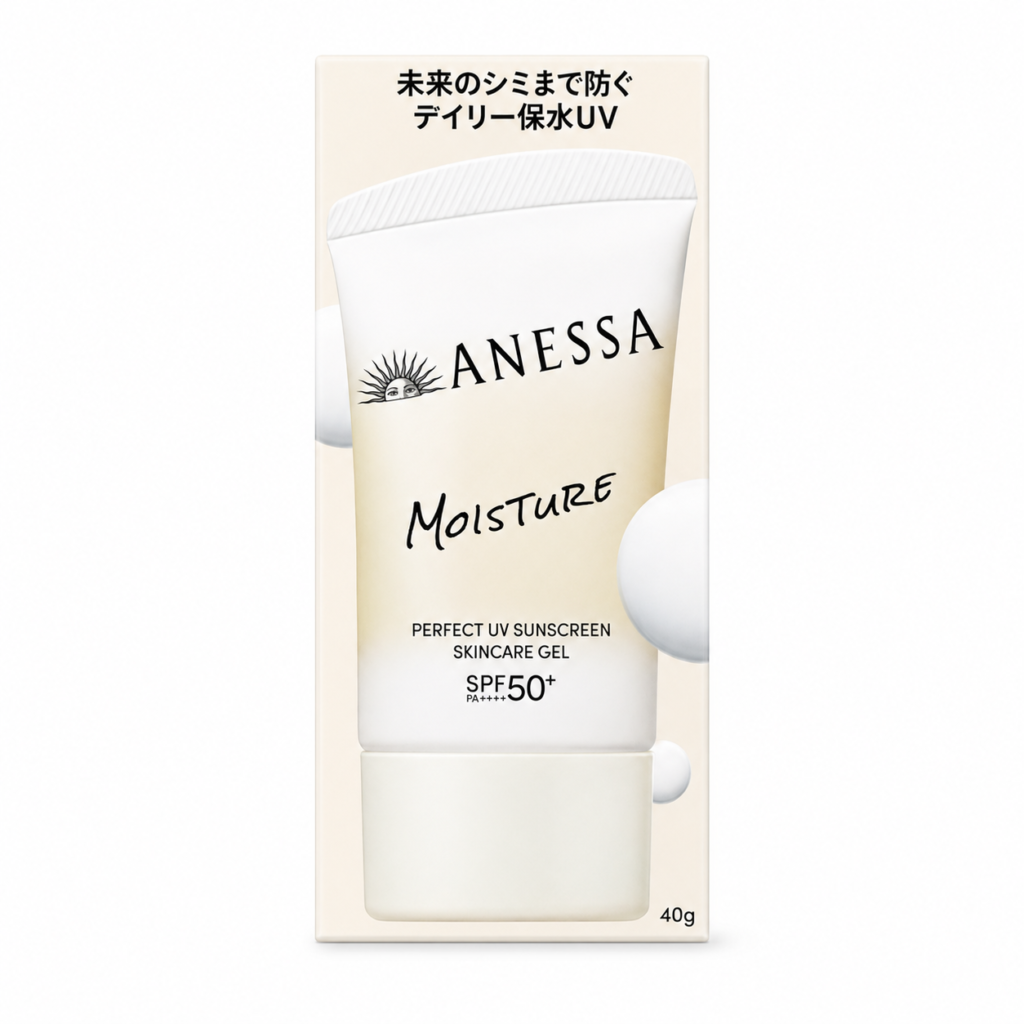
| Anessa Perfect UV Gel Moisture SPF50+ PA++++ | Oily and combination skin — light gel texture | 40g | 899 | Add to cart |
| Anessa Perfect UV Milk SPF50+ PA++++ | Daily use and the beach — water and sweat resistant | 60ml | 1,699 | Add to cart |
| Anessa Brush On UV Cut Powder SPF50+ | Reapplying over makeup during the day | — | 1,499 | Add to cart |
| Logically, Skin Sun Block SPF50+ PA++++ | A professional sunscreen for daily use | 70g | 1,499 | Add to cart |
| Lirene IR Complex Sun Protection Cream SPF50 | The most affordable option for daily use | — | 499 | Add to cart |
The most popular choice: Anessa Perfect UV Gel at 899 EGP — a light gel with no white cast and no sticky finish, which is what makes people actually use it every day.
Which one suits your skin?
- Oily or combination skin: Anessa Gel Moisture — the gel absorbs fast and leaves no shine.
- Dry skin: Anessa Milk or Lirene — a creamier texture that moisturises alongside the protection.
- If you wear makeup: a gel under the makeup plus Anessa UV powder for reapplication through the day.
- Beach and swimming: Anessa Milk — water and sweat resistant, reapplied after each swim.
- For men: the gel texture is faster and easier. The full routine is in our men’s grooming guide.
- On a budget: Lirene SPF 50 at 499 EGP — what matters most is that you use sunscreen at all.
Winter too, not just summer
This is the biggest misconception. UVA intensity — the rays behind pigmentation and wrinkles — stays roughly constant all year and passes through cloud and glass. Sitting by an office window or driving exposes you to it. In Egypt, protection is a year-round daily habit rather than a seasonal one.
Six mistakes that waste your sunscreen
- Too little product. The most common error. Two finger-lengths for face and neck.
- Applying once in the morning. Protection degrades with time and sweat. Reapply every two hours outdoors.
- Forgetting ears, neck and the backs of the hands. These are where sun damage shows first.
- Relying on the SPF in your foundation. You never apply enough of it for the rating to hold.
- Using it only in summer. UVA is there all year.
- Layering it straight onto wet moisturiser. Leave a minute or two between layers so each one sets.
A note: sunscreen is a preventive cosmetic product. Existing dark patches, pigmentation or any change in a mole need a dermatologist’s assessment — sunscreen prevents further damage but does not treat what is already there.
Not sure which to pick? Message us on WhatsApp with your skin type and whether you wear makeup, and we will recommend the right one.
Frequently asked questions
What is the best sunscreen in Egypt?
For oily and combination skin, Anessa Perfect UV Gel at 899 EGP for its light texture. For dry skin and the beach, Anessa Milk at 1,699 EGP, which is water resistant. On a budget, Lirene SPF 50 at 499 EGP.
SPF 30 or SPF 50?
The difference in blocking is about one percent, 97% versus 98%. Quantity and reapplication matter far more. An SPF 30 applied properly outperforms an SPF 50 applied thinly.
What does PA++++ mean?
It is the Japanese scale for UVA protection, and four plus signs is the highest grade. UVA causes pigmentation and wrinkles and passes through windows, so this marking matters as much as SPF, if not more.
How often should I reapply?
Every two hours outdoors, and immediately after swimming or heavy sweating. Indoors and away from windows, a morning application can be enough.
Do I need sunscreen in winter?
Yes. UVA intensity stays roughly constant all year and penetrates cloud and glass, and it is responsible for pigmentation and ageing. In Egypt, daily year-round use is the right approach.
Does sunscreen clog pores and cause breakouts?
That depends on the formula rather than on sunscreen as a category. Gel textures and lightweight formulas suit oily skin, and cleansing properly at night matters for removing residue.
What does shipping cost?
90 EGP for Cairo, Giza, New Cairo and the Fifth Settlement, 110 EGP for the rest of Egypt, and free over 1,999 EGP, with cash on delivery.